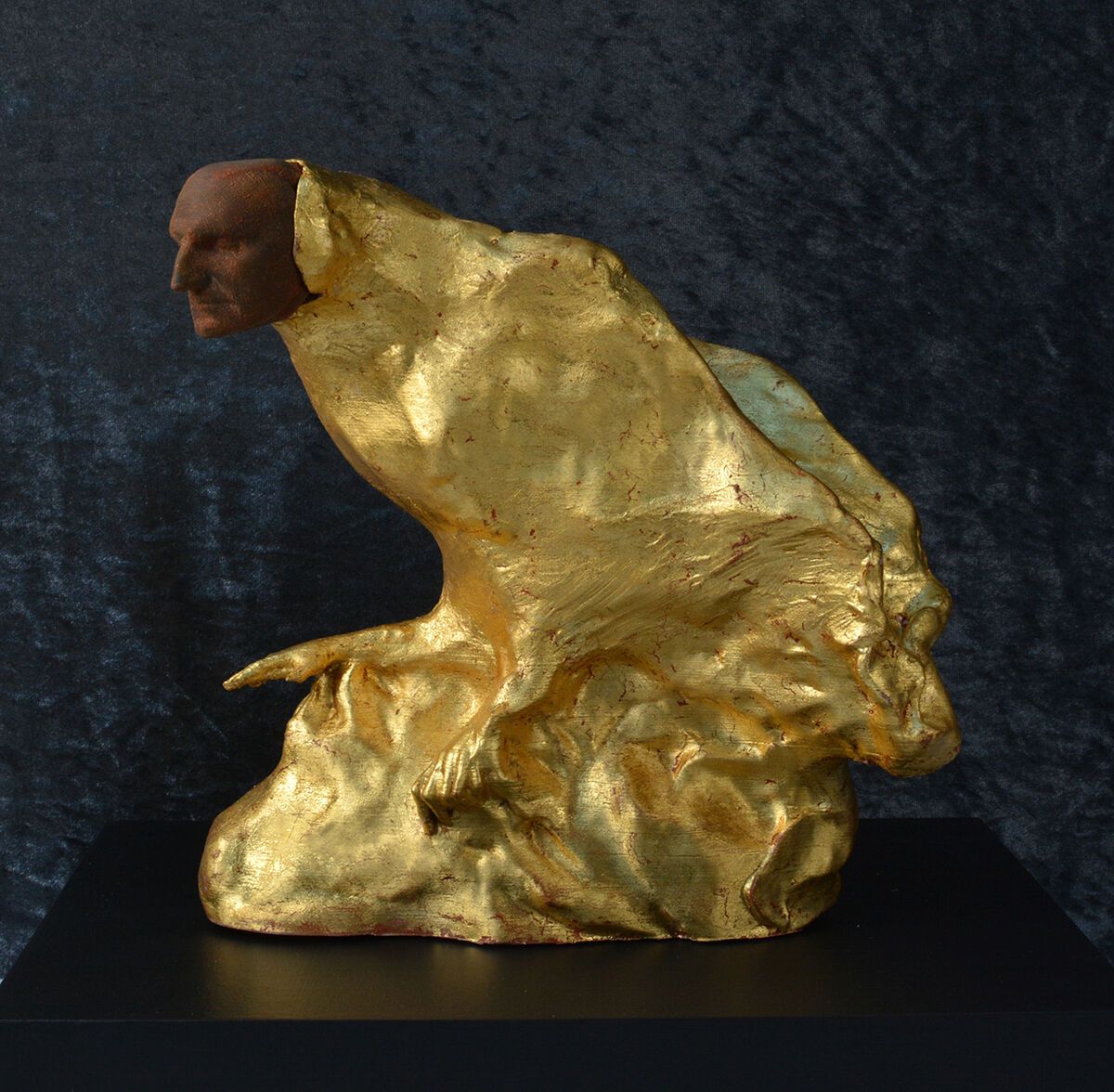
A performative video
installation
(running time: 12 min)
Here, – he is coming! Our Man
– our traveller. He has made the crossing from The Garden with suitcase in
hand. He tells us that whatever our imagination longs for, that is the paradise
we will meet, – and whatever our imagination cried for in loss, that was the
land which once was in the Utter East. His suitcase is full of dreams and dust.
For many centuries (almost three millennium), within the Abrahamic
religions, a belief has been held in an earthly paradise, a sublime garden this
side of death.
The word paradise is from the Old East Iranian
pairidaeza
meaning a deliberately enclosed area and is the etymological
root of our word
park
. In Second
Temple era Judaism
paradise
came to
be associated with the Garden of Eden
Originally located at the beginning of the east, Eden was a primordial
paradise characterized by perfection, freedom, delicate fragrances, an
unvarying springtime
– and peace between
man and animals.
At its centre grew the apples from the tree of knowledge and a spring of
water which, after first watering the garden, separated itself into four
rivers, the Pishon, the Gihon, the Tigris and Euphrates. These rivers flowed
into our sections of the world, providing sustenance – their sweetness becoming
a faint echo of their sublime source.
As mans empirical awareness grew, Eden withdrew geographically more and
more Eastwardly, its final location before disappearing from our world
consciousness was at the very east but now separated from our lands by a large
expanse of impenetrable ocean and its divine knowledge sealed by a ring of
angelic fire.
Our belief in the garden has given rise in our collective consciousness
to a profound nostalgia for this lost but not forgotten paradise, and a strong
desire to recover it.
A short distance from where you are standing is the entrance to Oslo's
Botanical Gardens. There you will find many sweet smelling plants and trees to
walk amongst, within their DNA structure a faint memory of Eden still
reverberates.